
Democracy does not sustain itself automatically. It depends on an informed public, and an informed public depends on journalists who understand not only how to report, but also the legal and ethical boundaries within which reporting must take place.
This is the quiet but vital work that the Media Law Forum (MLF) Sri Lanka has been carrying out through its latest initiative — and the results are already becoming evident.
The Problem That Demanded a Response
Sri Lanka’s recent electoral history provides a sobering backdrop. Research has consistently identified the 2019 presidential election and the 2020 parliamentary election as periods during which coordinated information disorder campaigns were deliberately directed at Muslim and Tamil communities. According to United Nations data, harmful speech increased by 113% during the November 2020 general election period. Gender-based hate targeting female candidates, along with discriminatory content aimed at ethnic and religious minorities, rose sharply during the same time.
Although the 2024 presidential and parliamentary elections, as well as the 2025 local government elections, showed relative improvement, the threat has not disappeared. Future election cycles remain vulnerable unless journalists are equipped to identify and resist the forces that drive information disorder.
The Project and Its Partners
It was within this context that MLF launched the project *Strengthening Resilience Against Disinformation in Sri Lanka*, implemented in partnership with Democracy Reporting International (DRI) and Factum, with co-funding support from the European Union.
DRI is an independent, non-partisan organisation that supports citizens’ rights to participate in political life, while Factum is a Sri Lankan think tank specialising in digital politics and political economy. Together, the three organisations brought complementary expertise to address a growing challenge in Sri Lanka’s media landscape.
The project developed practical training tools covering election campaign finance laws as they apply to digital and social media content, Election Commission media guidelines, legal frameworks surrounding hate speech and information disorder, and the emerging challenge posed by generative AI content in electoral contexts.
Taking the Training Directly to Journalists
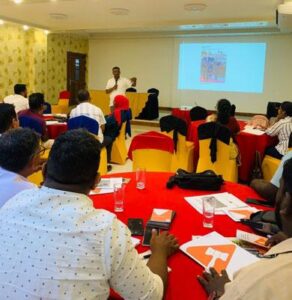
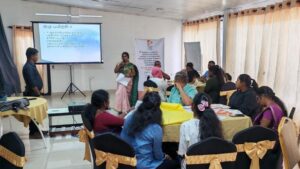
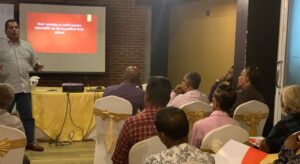
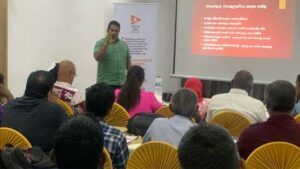
Rather than limiting the programme to a single conference venue, MLF took the training directly into newsrooms and regional media spaces.
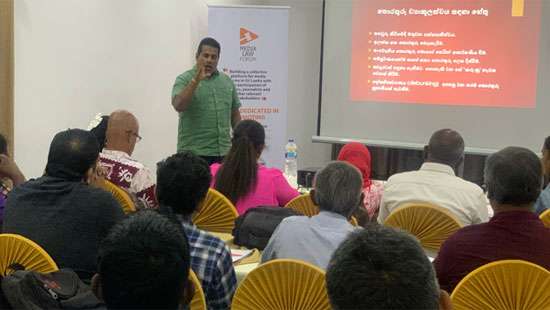
Ten sessions were conducted at media institutions in and around Colombo, while another ten sessions reached journalists and media practitioners across the provinces. The trainings were delivered in Sinhala, Tamil, and English, engaging both traditional and digital media professionals.
Importantly, the sessions moved beyond conventional lecture formats. Discussions were interactive and focused on the real legal and ethical dilemmas journalists encounter in the field — from responsibly reporting on inter-ethnic tensions to identifying AI-generated misinformation and understanding what the law permits during election periods.
More than 150 journalists actively involved in news production participated in the Colombo newsroom sessions alone.
A particularly significant feature of the programme was its emphasis on inclusion. Approximately 40% of participants were female journalists and media practitioners, reflecting a conscious effort to ensure broader representation within the media sector.
Voices from the Field
Participant feedback offered perhaps the clearest indication of the programme’s impact.
Shanuka Kumarasinghe of the Sri Lanka Rupavahini Corporation (SLRC), the country’s national broadcaster, noted that many media institutions continue to struggle with compliance during election reporting periods. He said the MLF session provided exactly the kind of legal and ethical grounding SLRC requires as it prepares for future elections.
A journalist, S.D. Weerasooriya described the Trincomalee District workshop as both highly successful and practically useful, particularly for regional journalists navigating complex legal frameworks.
Another journalist, W.D. Kumudinie from Polonnaruwa, said the programme addressed critical knowledge gaps. “We may know some things, but there are also many important legal matters that we do not always know,” she explained.
Meanwhile, L. Abilashini of *Veerakesari*, a young journalist early in her career, said the training exceeded her expectations and provided valuable insights she could immediately apply in her professional work.
Building Stronger Election Reporting
The expected outcome of these sessions is clear: more accurate, balanced, and socially responsible election reporting.
Journalists who leave with a stronger understanding of legal obligations and ethical reporting practices are better equipped to serve the public interest during periods when reliable information matters most.
For legal support related to election reporting or freedom of expression matters, MLF’s 24-hour hotline is available at 0743070888.
Source – dailymirror.lk/